
Blog
Shift Toward Privacy-First Platforms In Online Entertainment


Data privacy has moved from a technical concern to a mainstream expectation. In 2026, people engaging with digital entertainment are far more aware of how their personal information is collected, stored, and monetized. That awareness is reshaping everything from how streaming services personalize recommendations to how gaming platforms authenticate users.
High-profile data breaches and regulatory fines have played their part, but the shift runs deeper than fear alone. Audiences increasingly see privacy as part of overall quality. A platform that respects user data signals professionalism, reliability, and long-term value in a crowded digital market.
This change is visible even in niche corners of online entertainment where anonymity has traditionally mattered. As privacy-centric access models gain attention, some users looking for incognito-style experiences will visit sites like those on the inclave casino list. These sites appeal to players who have the expectation of control, discretion, and transparency, something that now spans the entire entertainment landscape.
Drivers Behind Privacy-First Adoption
Several forces are pushing entertainment platforms toward privacy-first design, but regulation is one of the strongest. Governments are no longer content with vague privacy policies or opt-out mechanisms buried in settings menus. Enforcement actions now carry real financial and reputational consequences, especially when data is involved.
At the same time, privacy has become a boardroom issue rather than a legal afterthought. According to the TrustArc Seven Keys to Privacy in 2025 report, 78% of organizations now consider privacy a core part of business strategy. That figure matters because it shows a shift in mindset: privacy is being treated as infrastructure, not compliance overhead.
Consumer behaviour completes the picture. People are quicker to abandon platforms that feel invasive, particularly when alternatives are only a tap away. In entertainment, where switching costs are low, privacy missteps can undo years of brand-building almost overnight.
Technology Enabling User Data Control
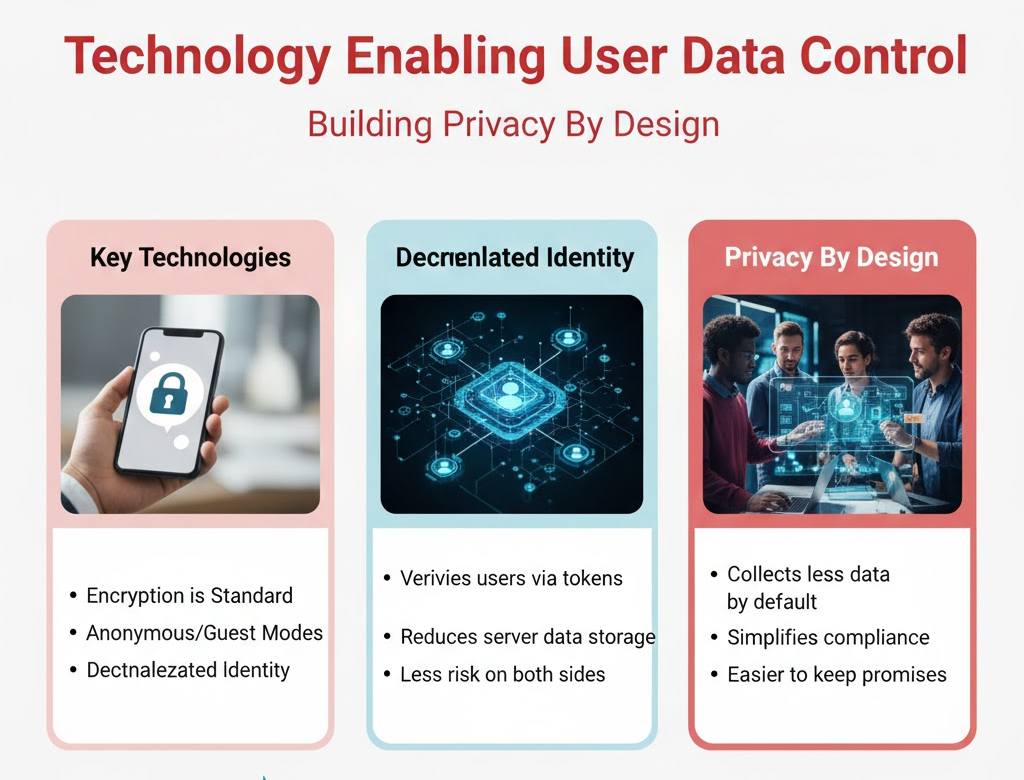
Privacy-first promises would ring hollow without technical backing. What has changed in recent years is the maturity of tools that allow platforms to limit data collection without degrading the user experience. Encryption is now standard rather than exceptional, while anonymous or guest modes are increasingly common across streaming, gaming, and social platforms.
Decentralized identity systems are also gaining traction. Instead of storing vast amounts of personal information on central servers, some platforms verify users through tokens or blockchain-based credentials. The user proves eligibility without handing over a complete profile, reducing risk on both sides.
Crucially, these technologies support a “privacy by design” philosophy. Rather than bolting on controls after launch, developers are building systems that collect less data by default. That architectural choice simplifies compliance and makes privacy promises easier to keep when platforms scale.
Consumer Trust As Competitive Advantage
Trust has become a measurable asset in digital entertainment. Platforms that explain data use clearly and offer meaningful choices are seeing stronger engagement, even when they ask for information. Transparency encourages participation rather than discouraging it.
Research backs this up. Data from Verve’s 2025 privacy mindset report shows that 55% of users are more likely to share data when they understand how it is used. The implication is straightforward: clarity builds confidence, and confidence drives interaction.
This dynamic changes how success is measured. Instead of maximizing raw data volume, leading platforms focus on data quality and consent. Fewer details, freely given, are more valuable than extensive profiles gathered through opaque practices.
How Privacy Standards Shape Platform Choice
Privacy expectations now influence where people spend their time and money online. Subscription decisions are shaped not just by content libraries or gameplay features, but by how safe a platform feels. A single enforcement action can tip the balance.
Privacy standards are becoming part of comparison shopping. Whether choosing a streaming service, a multiplayer game, or another digital pastime, audiences increasingly factor in how much control they retain over their information. Platforms that can demonstrate restraint and accountability gain an edge that marketing alone cannot buy.
What This Means For Digital Entertainment
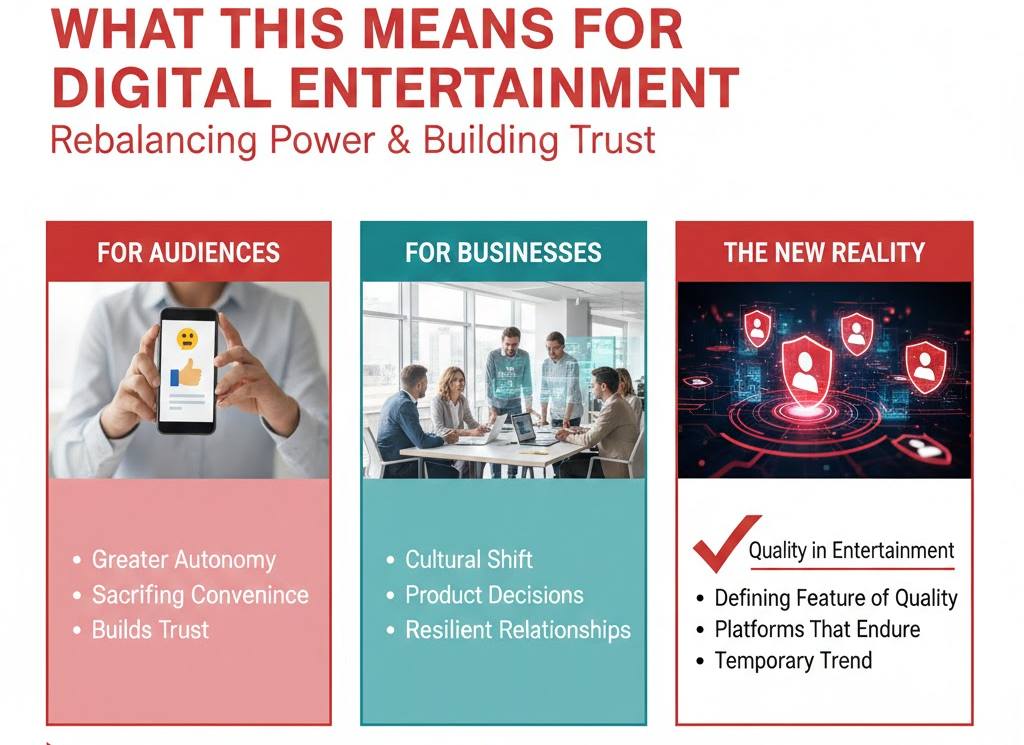
The move toward privacy-first platforms signals a broader rebalancing of power between users and providers. Entertainment companies are learning that trust scales better than surveillance, especially as regulation tightens and public scrutiny grows.
For audiences, the benefit is greater autonomy without sacrificing convenience. For businesses, the challenge is cultural as much as technical: embedding privacy into product decisions, not just policy documents. Those who succeed are likely to build more resilient relationships with their users.
In 2026, privacy is no longer a niche concern or a temporary trend. It has become a defining feature of quality in online entertainment, shaping which platforms endure and which are quietly left behind.
Conclusion
The shift toward privacy-first platforms marks a structural change in how online entertainment is designed, marketed, and evaluated. What began as a response to regulation and security failures has evolved into a broader quality signal for users who now associate data respect with platform credibility. In an environment where entertainment options are abundant and switching costs are low, trust has become a decisive differentiator.
Platforms that adopt privacy by design, minimize unnecessary data collection, and communicate transparently are better positioned to sustain long-term engagement. This approach not only reduces regulatory and reputational risk but also aligns with changing consumer expectations around autonomy and control. As 2026 progresses, privacy is no longer an optional enhancement; it is a foundational requirement for relevance and resilience in digital entertainment.
Disclaimer
This article is intended for informational and educational purposes only. It does not constitute legal, financial, or regulatory advice. References to third-party platforms, technologies, or reports are provided for contextual illustration and do not imply endorsement. Readers should conduct their own due diligence and consult qualified professionals before making decisions related to data privacy, compliance, or digital platform usage.
References
- TrustArc. (2025). Seven Keys to Privacy: Building Trust in a Regulated Digital Economy. TrustArc Research Division.
- Verve Group. (2025). The Privacy Mindset Report: Consumer Attitudes Toward Data Transparency and Control. Verve Insights.
- European Union. (2024). General Data Protection Regulation (GDPR): Enforcement and Penalties Overview. Publications Office of the European Union.
- IBM Security. (2024). Cost of a Data Breach Report. IBM Corporation.
- World Economic Forum. (2024). Rethinking Digital Trust: Privacy, Identity, and the Future of Online Platforms. World Economic Forum Reports.