
Blog
Gamified Software Training Meets Video Game Translation
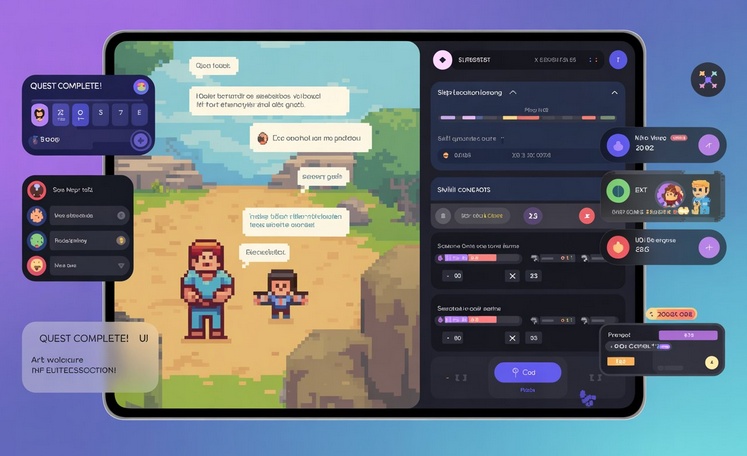
Imagine opening a software training module expecting a routine walkthrough, only to find an experience that feels genuinely engaging. You earn points, advance through levels, and tackle challenges that make learning interactive and rewarding. This shift didn’t happen overnight. Gamified software training emerged because teams needed a better way to keep learners engaged. No one wants their employees to disengage during onboarding and forget everything later.
As these training modules reached teams across different countries, a new challenge emerged. Gamified training only succeeds if learners can immerse themselves. The moment confusing language or awkward phrasing slows them down, engagement drops, and the learning experience suffers. Motivation wanes, and learning outcomes decline. This is where video game translation plays a critical role. When the language feels natural, learners stay immersed, and the training becomes seamless. And when the experience flows, training stops feeling like a task and starts feeling like progress.
Why Gamified Training Works Better Than Traditional Learning
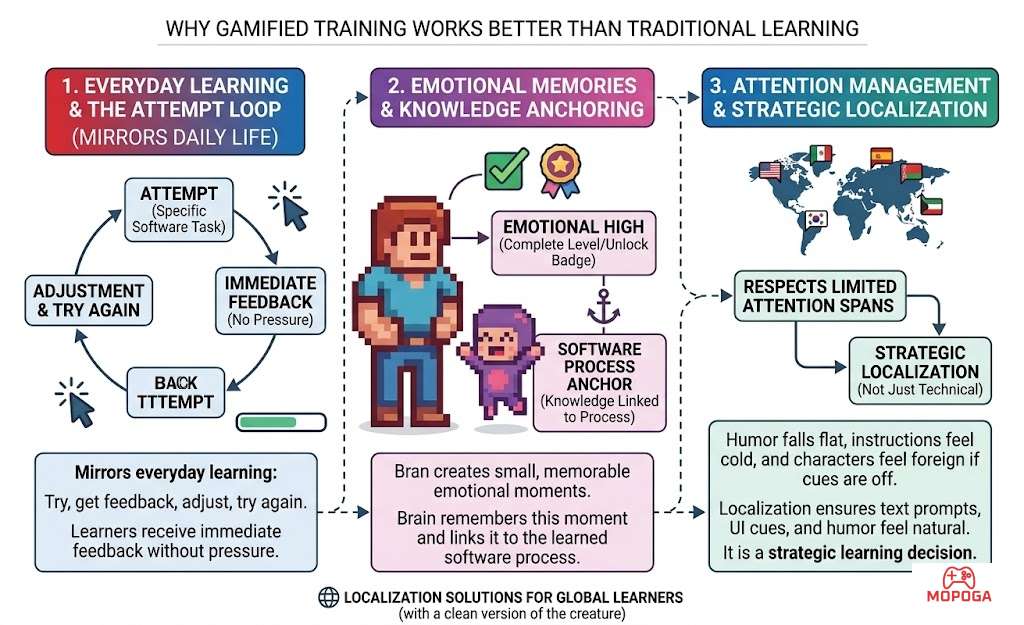
Research highlights three key reasons why gamified training is so effective. First, it mirrors how people learn in daily life. It mirrors everyday learning: attempt, adjust, and try again. Learners receive immediate feedback without pressure or lengthy explanations.
Second, it creates emotional memories. Completing a level or unlocking a badge may seem small, but the brain remembers the moment. That memory becomes linked to the software process being taught. Third, it respects attention spans. When training crosses borders, these strengths can disappear fast if language and cultural cues are off. Humor falls flat. Instructions feel cold. Characters feel foreign. That is why localization is not a technical step. It is a strategic learning decision, and using the right translation software for business ensures every element, from text prompts to UI cues, resonates naturally with users.
Where Video Game Translation Changes the Training Outcome
Industry research from enterprise learning platforms and global SaaS brands repeatedly stresses this point: translating text alone is not enough. Gamified training uses voiceovers, UI prompts, storylines, and character dialogue. All of these shape how users behave inside the experience.
Video game localization focuses on keeping intent intact. A warning must feel urgent in every language. A reward must feel earned, not ambiguous. A joke should feel natural or be replaced entirely.
Some teams rely on video translation experts who understand both gameplay logic and learning goals. That combination is rare but essential. Without it, training becomes technically accurate and emotionally empty.
Customer Service Training: Learning to Respond, Not Recite
Customer service teams sit at the front line of brand perception. Training them through gamified scenarios works well because real conversations are unpredictable. In well-designed programs, agents enter simulated chats or calls. A customer gets angry. A timer starts ticking. Multiple response options appear. The outcome changes based on the choice. If translation is handled poorly, the scenarios feel artificial. Done well, they resonate, making the experience familiar and believable. Top-performing articles note that localized tone matters more than literal accuracy here. Politeness levels differ. Apology phrasing changes by culture. When gamified training accounts for these subtleties, agents move beyond memorizing scripts; they learn to exercise sound judgment.
Support Center Training: Reducing Errors Through Interactive Practice
Support centers deal with complexity. Technical steps, system dependencies, and escalation rules—simply reading about these processes rarely leads to true understanding. Gamified modules allow support staff to “fix” problems in a safe, simulated environment. They click the wrong option and see the consequences without risk. Translation plays a quiet but decisive role. Button labels must match the real software. Error messages must feel authentic. When the language feels unnatural, learners lose confidence in the training, and mistakes are more likely. Industry analyses frequently report faster resolution times after localized game-based training. Not because the content was new, but because it finally felt usable.
Finance Department Training: Precision Without Pressure
Finance training might seem like an unlikely candidate for gamification, but research shows the approach works exceptionally well. Compliance rules, reporting workflows, and approval chains benefit from repetition. Gamified training turns repetition into progression. Levels unlock only when accuracy is high. Mistakes trigger immediate feedback.
Here, translation quality directly impacts risk. A mistranslated term can cause misunderstanding. The strongest implementations avoid slang and culture-heavy metaphors in finance modules. Instead, they focus on clarity and consistency, adapted carefully per market. When done right, finance teams finish training faster and ask fewer follow-up questions.
Social Media Team Training: Teaching Speed, Tone, and Judgment
Social media moves fast. Training needs to reflect that speed. Gamified simulations place teams inside trending scenarios. A post goes viral, and a complaint escalates. A sensitive topic appears. Localization here goes beyond words. Understanding cultural nuances helps teams judge what’s risky, humorous, or inappropriate in a fast-moving social media environment. Studies of multinational social teams show that localized training reduces public missteps significantly.
This is one area where media and entertainment translation expertise becomes useful. Social platforms borrow heavily from pop culture, humor, and visual storytelling. Translators who understand entertainment trends help training feel current, not stiff.
Marketing and Brand Growth Through Video-Based Training
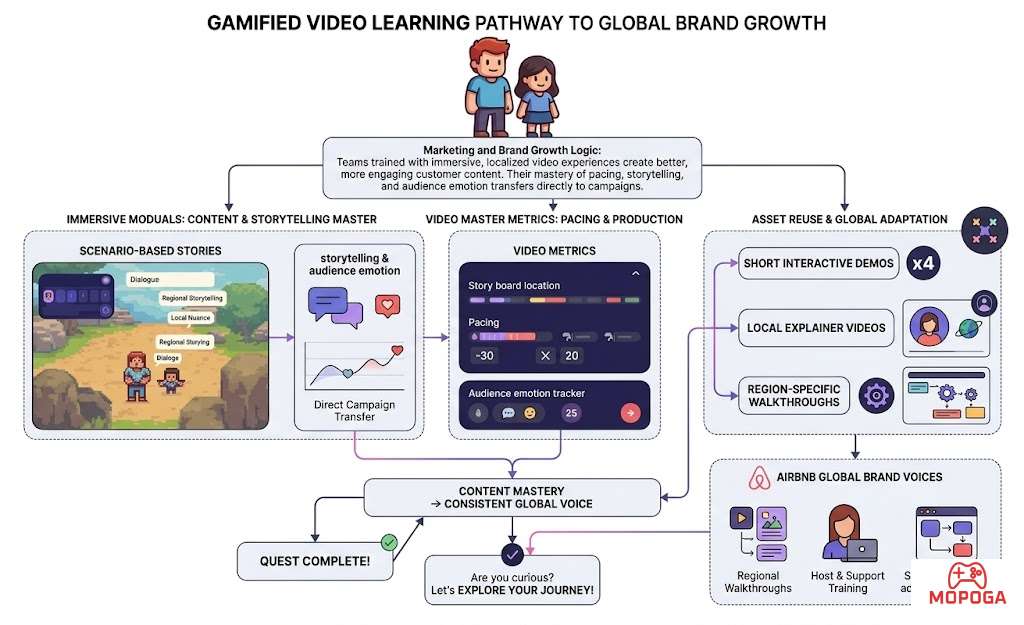
Several high-performing articles connect internal training with external brand performance. The logic is simple. Teams trained through immersive, localized video experiences create better customer-facing content. Marketing departments trained with gamified video modules understand pacing, storytelling, and audience emotion better. Those skills transfer directly into customer-facing campaigns.
Some brands even reuse training assets externally. Short interactive demos. Localized explainer videos. Region-specific walkthroughs. A commonly cited example is Airbnb. As it expanded into new markets, internal training relied heavily on scenario-based video learning adapted per region. Hosts, support teams, and marketers learned through localized stories, not generic instructions. That internal clarity translated into a consistent global brand voice.
Conclusion
The future of gamified software training isn’t about flashier visuals or piling on points; it’s about making the experience truly relevant to the learner. Adaptive scenarios that change based on the region. AI-driven branching dialogues that respect cultural norms. Continuous localization updates must become part of the core system rather than annual refreshes as a core system. When gamified training is paired with carefully executed video game translation, it does more than teach software; it shapes how teams think, respond, and uphold the brand experience.